










This research note forms part of an eight-phase technical analysis framework for investors. It is designed to strengthen market interpretation, process discipline, and risk awareness before indicators are used as confirmation tools.
Executive Context
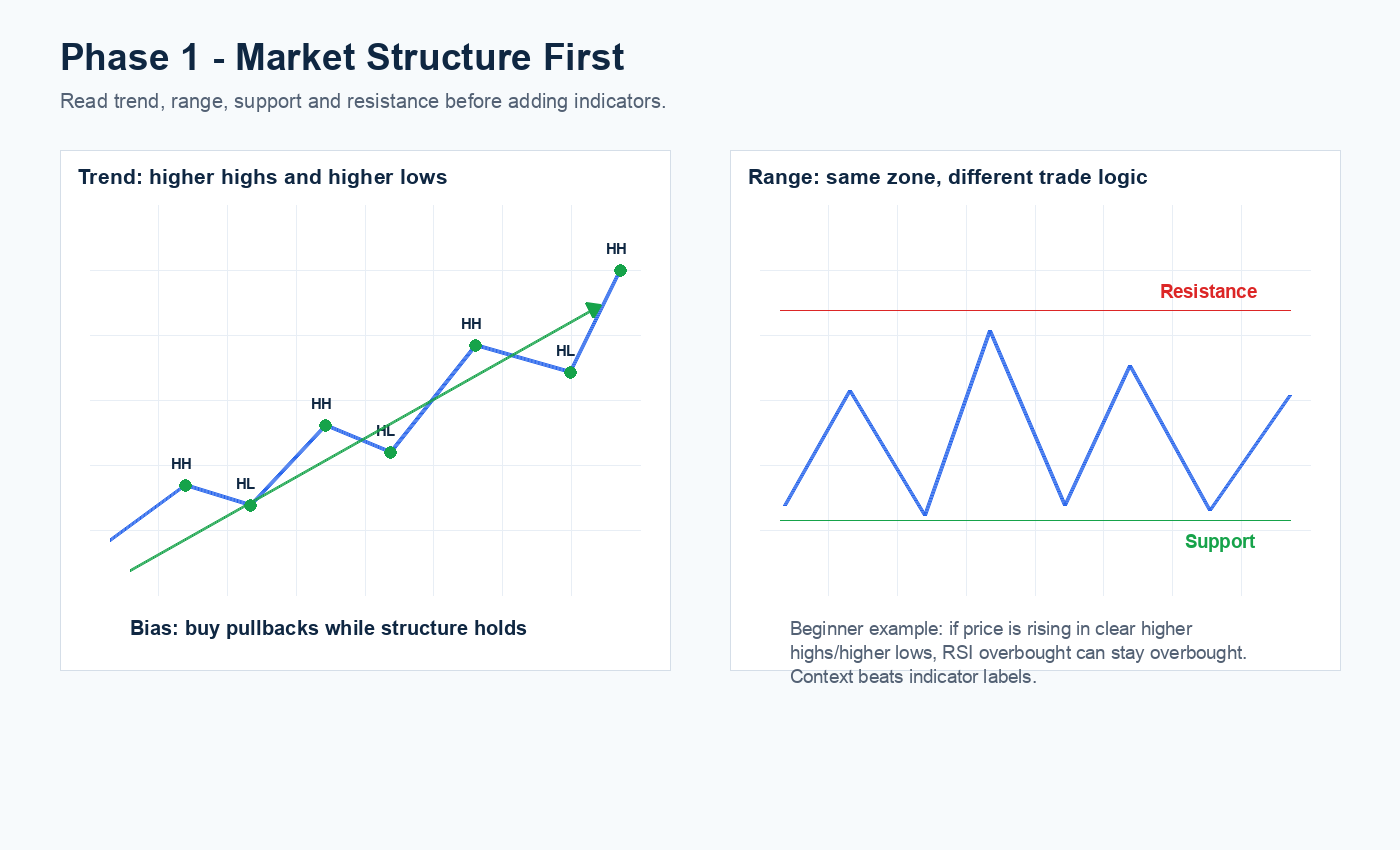
Market structure is the foundation of technical analysis. Before a moving average, oscillator, or chart pattern is considered, the investor should first understand the operating environment: is price trending, ranging, breaking out, or rejecting a key level? This first step reduces noise and gives every later indicator a clear context.
In a professional trading framework, indicators should confirm market structure rather than dictate the trade. The primary read comes from price behaviour, liquidity conditions, and clearly defined risk.
What To Assess First
- Trend: higher highs and higher lows suggest buyer control; lower highs and lower lows suggest seller control.
- Range: repeated rejection at both support and resistance suggests balance rather than directional conviction.
- Breakout: price closing beyond a recognized level may indicate a new regime, but confirmation matters.
- Failure: when price briefly breaks a level and returns inside the prior range, the market may be trapping late participants.
Applied Market Scenario
Assume EURUSD has been making higher lows for several sessions and then pulls back to a prior support area. The relevant assessment is whether the higher-low sequence remains intact. Until support breaks, the pullback may represent a test of demand rather than a confirmed reversal.
Client Takeaway
The objective is not to predict every candle. The objective is to define the market condition before capital is placed at risk. When the structure is unclear, the best professional decision is often to wait.
This material is provided for education and market understanding only. It is not personal investment advice, a recommendation to trade, or a guarantee of future performance.
NEHCap System Highlight
HFT_FIX is our FIX-engine high-frequency FX model; NEDEX is an arbitrage framework for short-lived pricing inefficiencies; and CREST is a fast support/resistance trend system built for rapid structural shifts.
NEDEX and CREST can run across MT4, MT5, and FIX API environments, depending on broker infrastructure and deployment requirements.
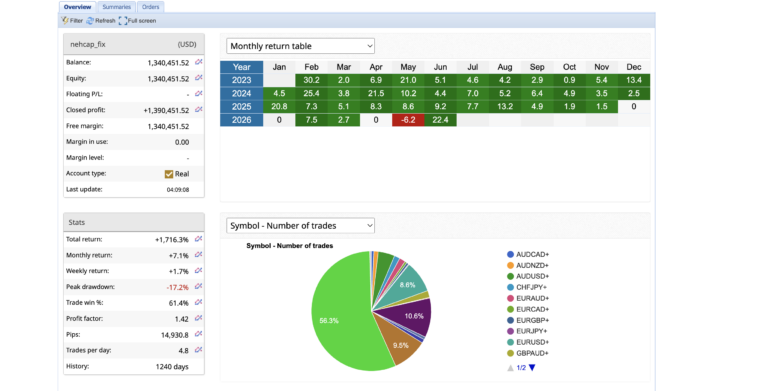
Live HFT_FIX tracking: View FXBlue account
System details: HFT_FIX | NEDEX | CREST
Contact: NEHCap contact | @mqlnehcap | t.me/nehcapmeta
Past performance is not a guarantee of future results. Trading involves risk.