










This client education note is part of an eight-phase framework for understanding indicators and price patterns. It is designed to help investors read charts with more structure, discipline, and risk awareness.
Executive Context
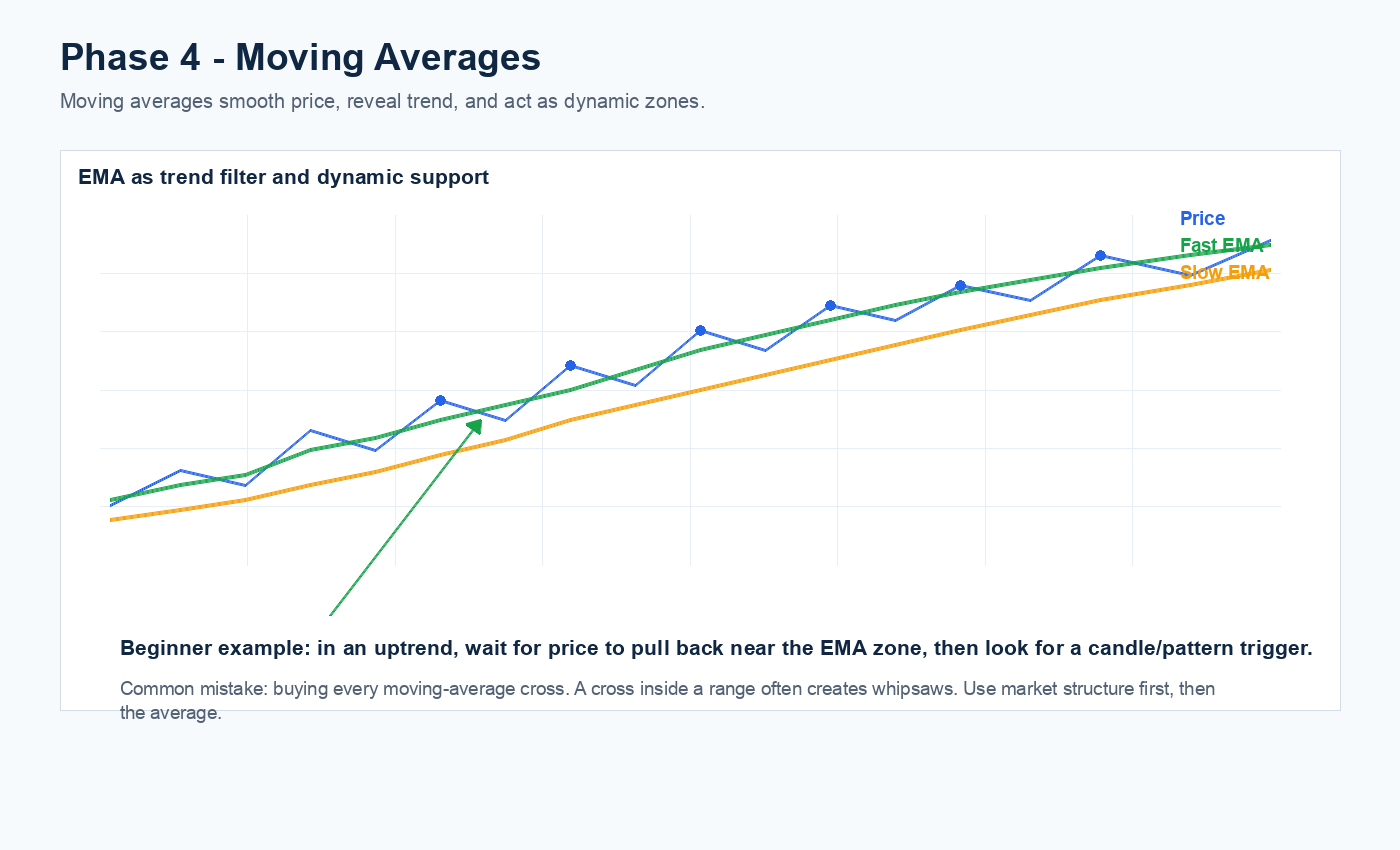
Moving averages smooth price data so the broader regime is easier to observe. They help investors distinguish between trending conditions, mean-reverting conditions, and periods where price has no clean directional bias.
The key is to treat moving averages as filters, not forecasts. A rising average does not guarantee higher prices; it simply shows that recent price data has been improving.
Professional Uses
- Direction filter: price above a rising average often supports a bullish operating bias.
- Dynamic support or resistance: trending markets may repeatedly respect an average during pullbacks.
- Regime change: price crossing and holding below a key average may warn that momentum is changing.
- Alignment check: multiple averages pointing in the same direction can show trend consistency.
Beginner Example
Assume USDJPY is trading above a rising 50-period moving average. A short setup against that trend may still work, but the investor should recognize it as a counter-trend idea. The risk standard should be stricter because the broader regime still favors buyers.
Client Takeaway
Moving averages are most useful when they help define the environment. They should answer “what regime are we in?” before they are used to support an entry decision.
This material is provided for education and market understanding only. It is not personal investment advice, a recommendation to trade, or a guarantee of future performance.
Previous: Phase 3 – Core Price Patterns | Next: Phase 5 – Momentum and Confirmation
NEHCap System Highlight
We run three brilliant specialist systems: HFT_FIX, a FIX-engine high-frequency FX model built for execution speed; NEDEX, an arbitrage framework designed to capture short-lived pricing inefficiencies; and CREST, a high-speed support/resistance trend system focused on fast structural shifts.
Together, they give clients three distinct research engines: speed, arbitrage intelligence, and structure-led trend participation.
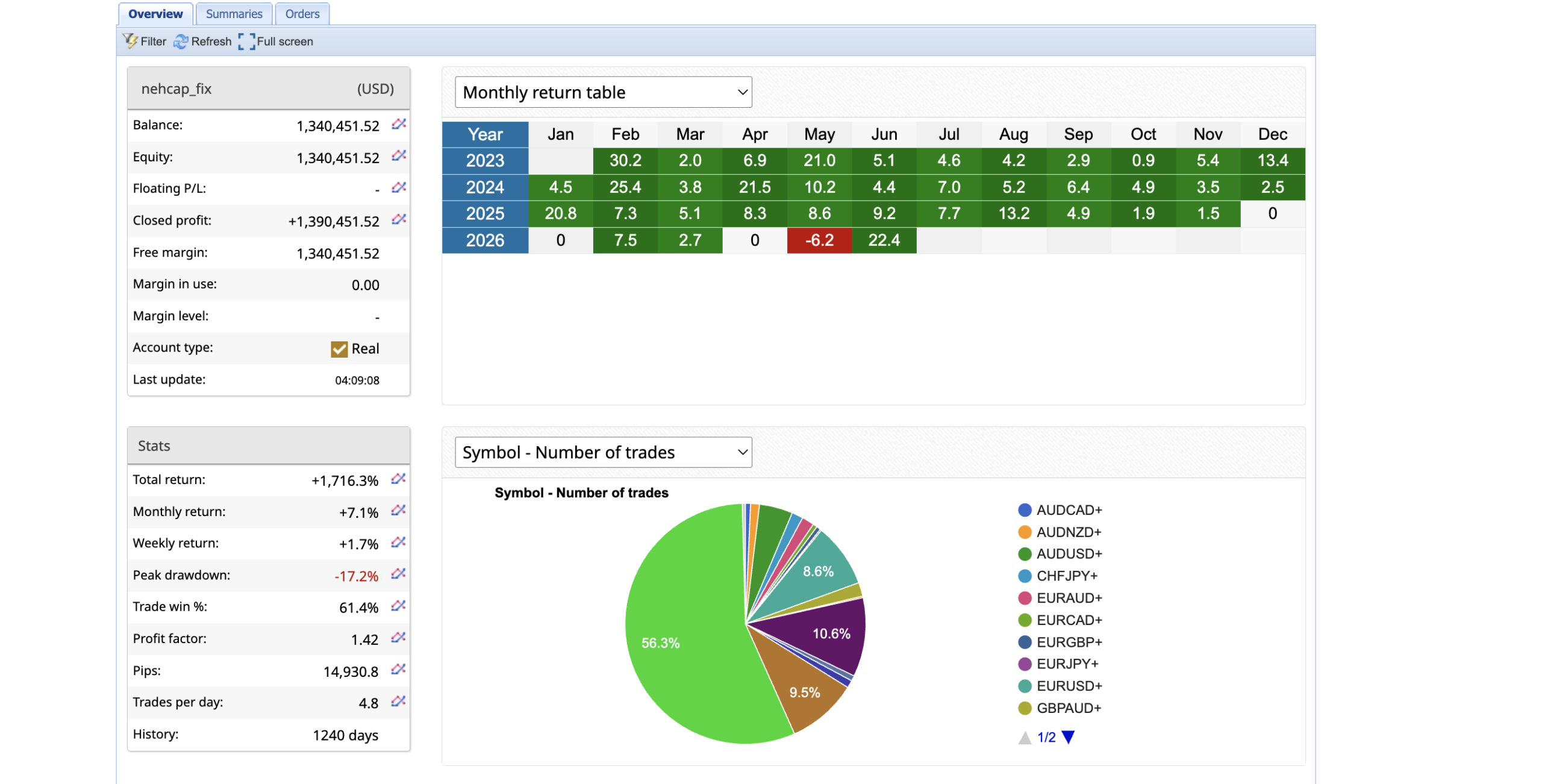
HFT_FIX live account: View verified FXBlue tracking
Contact: Contact NEHCap | Telegram: @mqlnehcap | t.me/nehcapmeta
Past performance is not a guarantee of future results. Trading involves risk and should be assessed against each client's objectives and tolerance.