










This client education note is part of an eight-phase framework for understanding indicators and price patterns. It is designed to help investors read charts with more structure, discipline, and risk awareness.
Executive Context
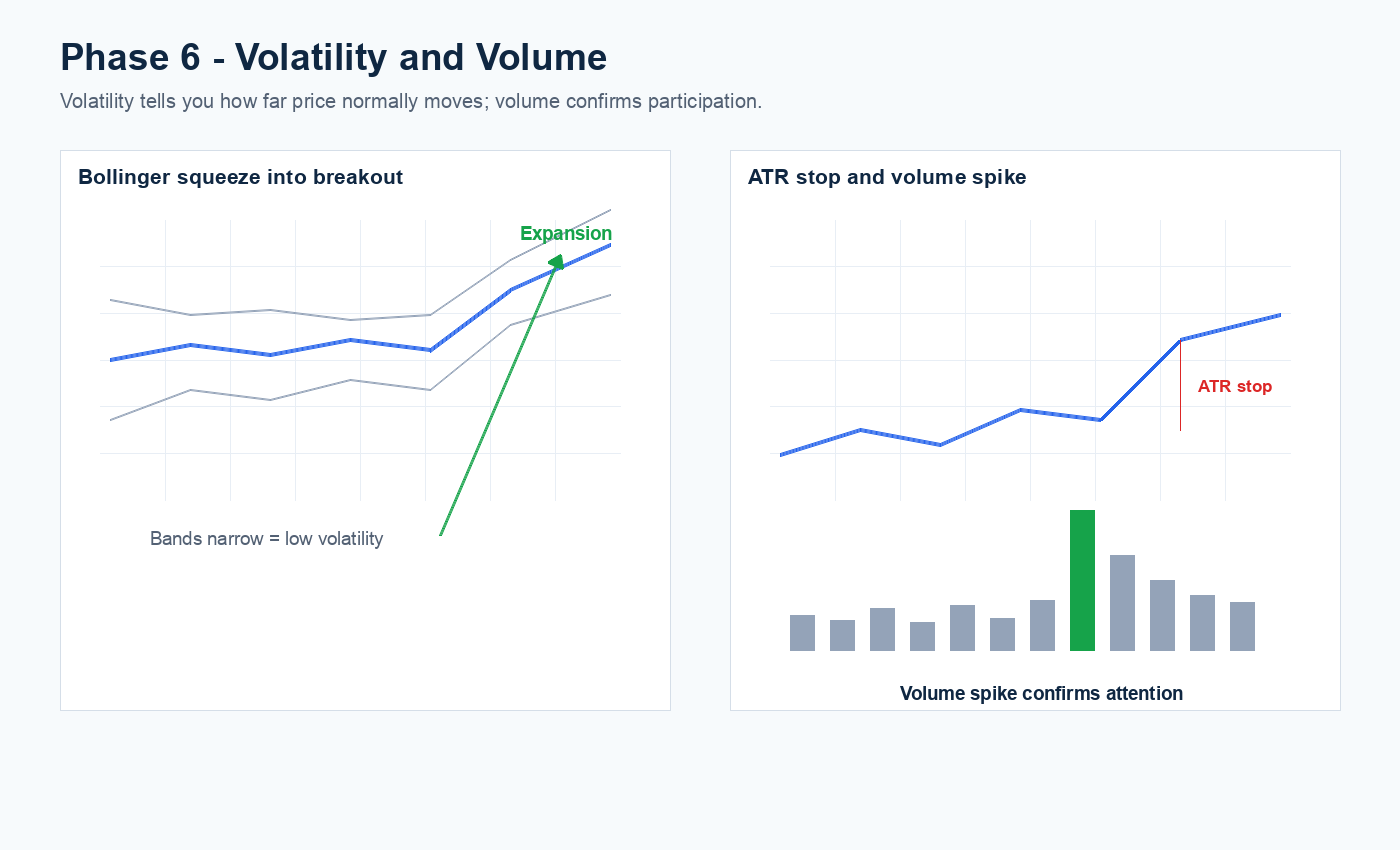
Volatility defines the size of normal movement. A strategy that ignores volatility may place stops too close in active markets or targets too far away in quiet markets. For investors, volatility is not just a chart feature; it is a risk-management input.
Participation measures, including volume where available, help evaluate whether a move is supported by broader activity or occurring in thin conditions. In spot FX, volume data can vary by source, so it should be interpreted carefully.
Professional Uses
- ATR: estimates typical movement and helps set realistic stop and target distances.
- Bollinger Bands: show volatility compression and expansion around a moving average.
- Compression: narrow ranges may warn that a larger move is developing.
- Expansion: wider ranges may confirm that market activity is increasing.
Beginner Example
If XAUUSD has an ATR of 25 dollars, a five-dollar stop may be unrealistic for a swing idea because normal movement can easily exceed it. A professional process sizes risk around current volatility instead of using the same stop distance in every market condition.
Client Takeaway
Volatility is where analysis meets risk. A technically attractive setup can still be poor if the stop, target, and position size do not respect current market movement.
This material is provided for education and market understanding only. It is not personal investment advice, a recommendation to trade, or a guarantee of future performance.
Previous: Phase 5 – Momentum and Confirmation | Next: Phase 7 – Combining Evidence
NEHCap System Highlight
We run three brilliant specialist systems: HFT_FIX, a FIX-engine high-frequency FX model built for execution speed; NEDEX, an arbitrage framework designed to capture short-lived pricing inefficiencies; and CREST, a high-speed support/resistance trend system focused on fast structural shifts.
Together, they give clients three distinct research engines: speed, arbitrage intelligence, and structure-led trend participation.
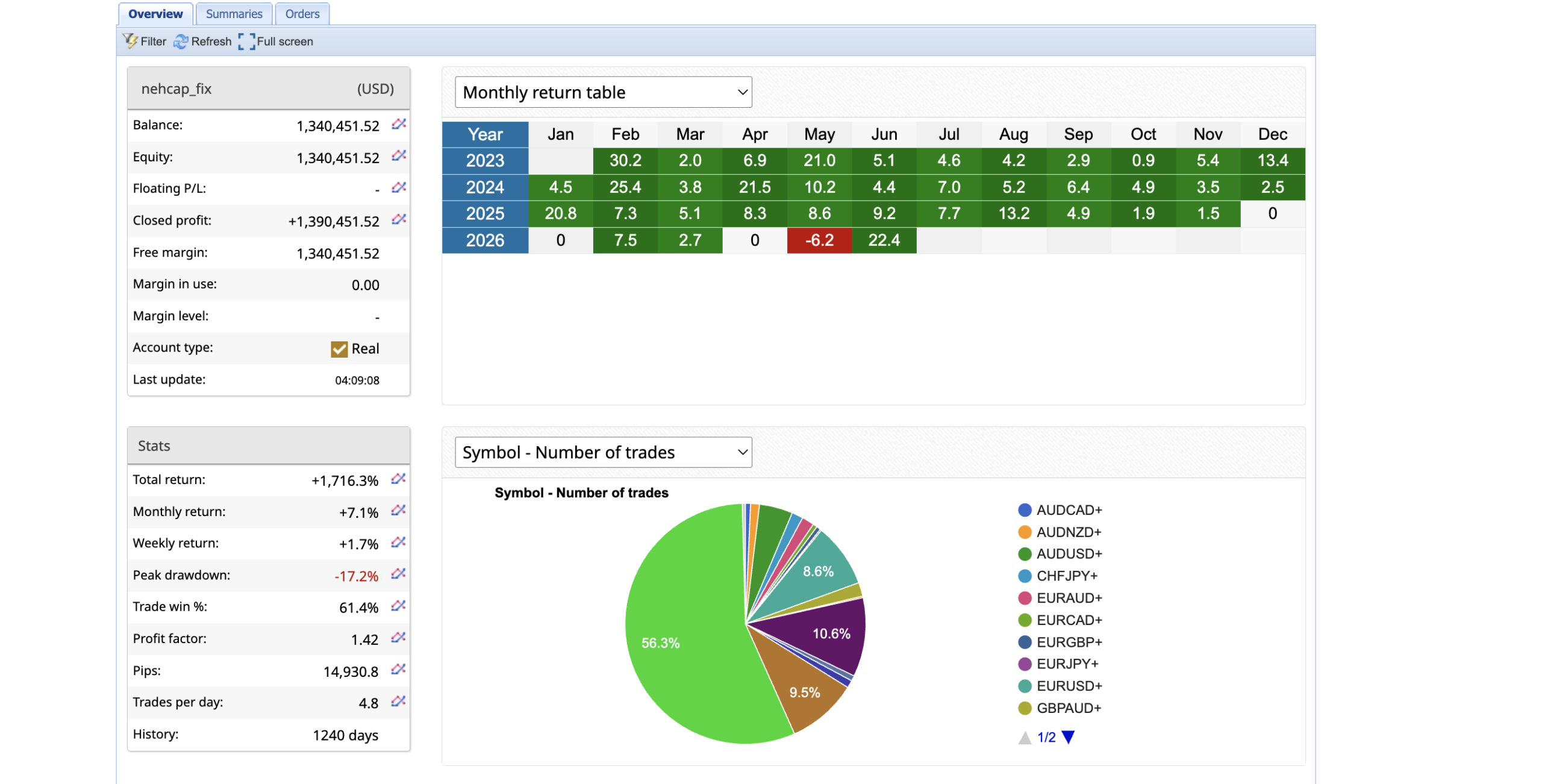
HFT_FIX live account: View verified FXBlue tracking
Contact: Contact NEHCap | Telegram: @mqlnehcap | t.me/nehcapmeta
Past performance is not a guarantee of future results. Trading involves risk and should be assessed against each client's objectives and tolerance.