










RBNZ: Annualized Q1 Sectoral Factor Model Inflation softens to 5.7%
…
This is a premium post.
[s2If !current_user_can(access_s2member_level4)]Please register for PREMIUM VERSION HERE to read full post below containing analysis. In case of any error or you think you are not able to read the full post below, please email us at support#nehcap.com [lwa][/s2If] [s2If current_user_can(access_s2member_level4)]
The Reserve Bank of New Zealand (RBNZ) released its Sectoral Factor Model Inflation gauge for the first quarter of 2023 this Thursday.
The gauge eased slightly to 5.7% YoY in Q1 202, compared with the 5.8% clip booked in Q4 2022.
The New Zealand Statistics (NZ Stats) released figures that showed the Consumer Price Index at 6.7%, lower than economists and the central bank had forecast.
Both measures are closely watched by the RBNZ.
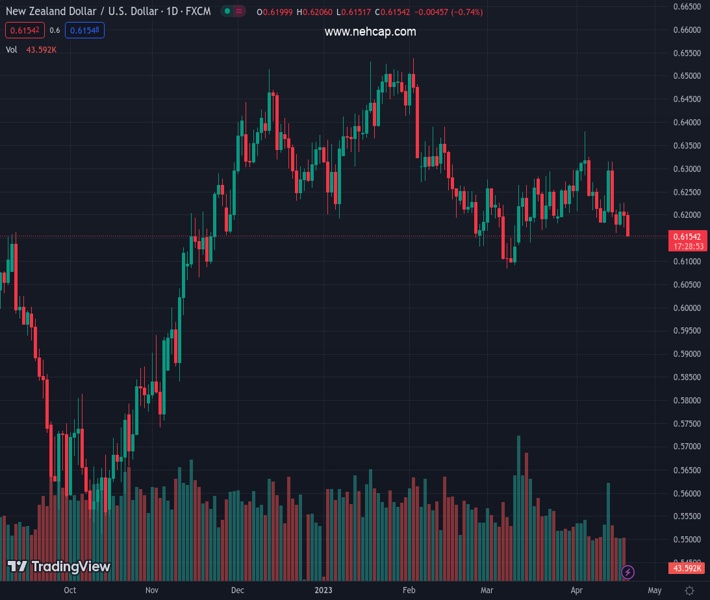
The Kiwi dollar is hit further by the RBNZ inflation gauge. NZD/USD is falling hard to test the 0.6150 level, as of writing, losing 0.73% on the day.
The Reserve Bank of New Zealand has a set of models that produce core inflation estimates. The sectoral factor model estimates a measure of core inflation based on co-movements – the extent to which individual price series move together. It takes a sectoral approach, estimating core inflation based on two sets of prices: prices of tradable items, which are either imported or exposed to international competition, and prices of non-tradable items, which are those produced domestically and not facing competition from imports.
[/s2If]
Join Our Telegram Group