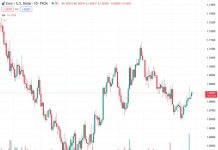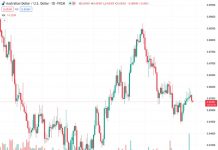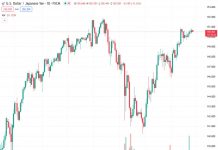











US Dollar stays resilient against its major rivals in the second half of the week.
…
This is a premium post.
[s2If !current_user_can(access_s2member_level4)]Please register for PREMIUM VERSION HERE to read full post below containing analysis. In case of any error or you think you are not able to read the full post below, please email us at support#nehcap.com [lwa][/s2If] [s2If current_user_can(access_s2member_level4)]
- US Dollar stays resilient against its major rivals in the second half of the week.
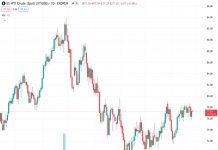
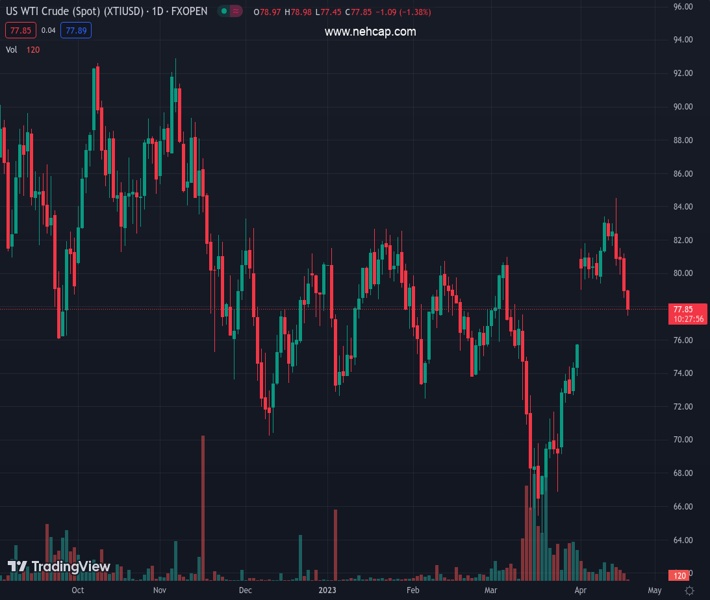
- Crude oil prices slide on worsening demand outlook, stronger USD.
- USD could react to macroeconomic data releases from the United States in the American session.
The US Dollar (USD) keeps its footing following Wednesday’s modest rebound as investors continue to stay away from risk-sensitive assets. Meanwhile, the renewed USD strength and growing concerns over a worsening demand outlook drag crude oil prices lower. Signs of sticky inflation in major economies remind market participants that central banks could cling to tight monetary policies at the cost of a slowdown in activity.
The US Dollar Index, which tracks the USD performance against a basket of six major currencies, stays in a tight range near 102.00 on Thursday. On a weekly basis, the index stays in positive territory, looking to snap a five-week losing streak.
The US Dollar Index trades slightly below the 20-day Simple Moving Average (SMA), currently located at 102.20. In case the DXY closes the day above that level, it could target 103.00 (static level, psychological level) and 103.50 (50-day SMA, 100-day SMA).
Meanwhile, the Relative Strength Index (RSI) indicator on the daily chart moves sideways near 50, suggesting that sellers refrain from committing to further USD weakness.
On the downside, 101.50 (static level) align as interim support ahead of 101.00/100.80 (psychological level, static level, multi-month low set on April 14). A daily close below that support area could open the door for an extended slide toward 100.00 (psychological level).
The US Federal Reserve (Fed) has two mandates: maximum employment and price stability. The Fed uses interest rates as the primary tool to reach its goals but has to find the right balance. If the Fed is concerned about inflation, it tightens its policy by raising the interest rate to increase the cost of borrowing and encourage saving. In that scenario, the US Dollar (USD) is likely to gain value due to decreasing money supply. On the other hand, the Fed could decide to loosen its policy via rate cuts if it’s concerned about a rising unemployment rate due to a slowdown in economic activity. Lower interest rates are likely to lead to a growth in investment and allow companies to hire more people. In that case, the USD is expected to lose value.
The Fed also uses quantitative tightening (QT) or quantitative easing (QE) to adjust the size of its balance sheet and steer the economy in the desired direction. QE refers to the Fed buying assets, such as government bonds, in the open market to spur growth and QT is exactly the opposite. QE is widely seen as a USD-negative central bank policy action and vice versa.
[/s2If]
Join Our Telegram Group