










#EURUSD @ 1.08676 The US core PCE, the Fed’s preferred gauge for inflation, edges down, sparking speculations for a Fed pivot. (Pivot Orderbook analysis)
…
This is a premium post.
[s2If !current_user_can(access_s2member_level4)]Please register for PREMIUM VERSION HERE to read full post below containing analysis. In case of any error or you think you are not able to read the full post below, please email us at support#nehcap.com [lwa][/s2If] [s2If current_user_can(access_s2member_level4)]
- The US core PCE, the Fed’s preferred gauge for inflation, edges down, sparking speculations for a Fed pivot.
- Consumer Sentiment improved, while inflation expectations ticked lower.
- EUR/USD Price Analysis: Upward biased, but short-term neutral, ahead of Fed and ECB’s decisions.
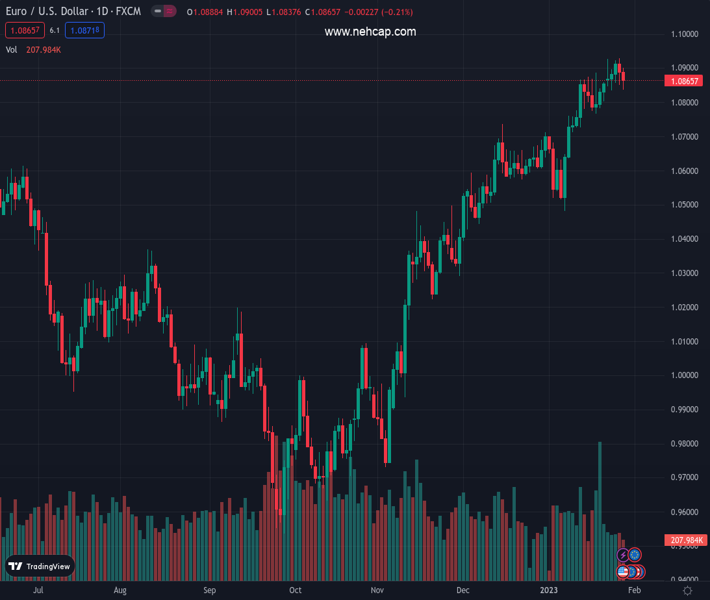
The pair currently trades last at 1.08676.
The previous day high was 1.093 while the previous day low was 1.085. The daily 38.2% Fib levels comes at 1.0881, expected to provide resistance. Similarly, the daily 61.8% fib level is at 1.0899, expected to provide resistance.
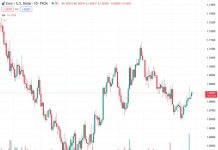
The EUR/USD got rejected from the 1.0900 psychological barrier for two consecutive days and on Friday slipped to the 1.0860 region after data from the United States (US) cemented the case for a 25 bps rate hike by the Fed. At the time of writing, the EUR/USD is trading at 1.0866.
Wall Street finished the week with gains, shrugging off worries about an impending recession in the United States. Thursday’s data cemented the case for a robust economy, with Q4’s expanding by 2.9% QoQ above estimates of 2.6%, while Q3 remained at 3.2%. That sparked conversations of a possible “soft landing” by the US Federal Reserve.
In the meantime, Friday’s data revealed that inflation is cooling down, probably at a faster pace than estimated. The Fed’s favorite inflation gauge, the core Personal Consumption Expenditure (PCE) was aligned with estimates of 4.4% YoY, but below November’s 4.7%. That augmented speculations around the Fed would slash the size of rate hikes, as December marked the first lift in rates not being at 75 bps. Instead, Powell and Co. went for a 50 bps as it was appropriate, as mentioned by them while emphasizing that the pace was not as important as the peak of rates.
As Friday’s session ends, the CME FedWatchTool shows that odds for a Fed’s 25 bps rate hike stand at 99.2%, and traders are foreseeing the Federal Funds rate (FFR) to peak at around 5%, by March’s meeting.
In another tranche of data, a poll from the University of Michigan reported the US Consumer Sentiment, which improved vs. the preliminary reading of 64.6 to 64.9. Data revealed that inflation expectations for 1-year are estimated at 3.9%, lower than the previous poll, while for a 5-year, they stood at 2.9%.
Across the pond, European Central Bank (ECB) officials had reiterated they would raise rates at the upcoming meeting on February 2. ECB’s President Christine Lagarde said that the bank would “stay the course” with a 50 bps rate hike in January and the next meeting after that, albeit inflation in the Eurozone slid to 9.2%.
That said, the stage is set with the Fed lifting rates to 4.50-4.75% and the ECB to 2.50%, which would reduce the spread between the US and the Eurozone. Hence, the EUR/USD could resume its upward bias and test 1.1000 unless an unpleasant dovish surprise by Lagarde caps the rally and tumbles the EUR/USD.
Ahead into the next week, the EUR/USD remains upward biased. The pullback in the last couple of days could be attributed to the 1.0900 mark probing to be difficult resistance to hurdle. Also, the monetary policy decisions of the ECB and the Fed were an excuse for traders to close their positions.
Even though the EUR/USD is pressured, the price action from Thursday and Friday formed a series of successive candlesticks with a long bottom wick, suggesting that some buying pressure is resting. Nevertheless, the commitment o hold EUR/USD long positions throughout the weekend, and with uncertainty in the financial markets, kept the EUR/USD shy of reclaiming 1.0900.
A breach of the latter would expose the 1.1000 mark. As an alternate scenario, the EUR/USD diving below 1.0835, the weekly low, and the pair would dip toward the 20-day Exponential Moving Average (EMA) at 1.0788.
Technical Levels: Supports and Resistances
EURUSD currently trading at 1.0865 at the time of writing. Pair opened at 1.0892 and is trading with a change of -0.25 % .
| Overview | Overview.1 | |
|---|---|---|
| 0 | Today last price | 1.0865 |
| 1 | Today Daily Change | -0.0027 |
| 2 | Today Daily Change % | -0.2500 |
| 3 | Today daily open | 1.0892 |
The pair remains strongly bullish on the daily timeframe. It trades above its 20 SMA @ 1.0762, 50 SMA 1.0613, 100 SMA @ 1.0269 and 200 SMA @ 1.0311.
| Trends | Trends.1 | |
|---|---|---|
| 0 | Daily SMA20 | 1.0762 |
| 1 | Daily SMA50 | 1.0613 |
| 2 | Daily SMA100 | 1.0269 |
| 3 | Daily SMA200 | 1.0311 |
The previous day high was 1.093 while the previous day low was 1.085. The daily 38.2% Fib levels comes at 1.0881, expected to provide resistance. Similarly, the daily 61.8% fib level is at 1.0899, expected to provide resistance.
Note the levels of interest below:
- Pivot support is noted at 1.0852, 1.0812, 1.0773
- Pivot resistance is noted at 1.0931, 1.097, 1.101
| Levels | Levels.1 |
|---|---|
| Previous Daily High | 1.0930 |
| Previous Daily Low | 1.0850 |
| Previous Weekly High | 1.0888 |
| Previous Weekly Low | 1.0766 |
| Previous Monthly High | 1.0736 |
| Previous Monthly Low | 1.0393 |
| Daily Fibonacci 38.2% | 1.0881 |
| Daily Fibonacci 61.8% | 1.0899 |
| Daily Pivot Point S1 | 1.0852 |
| Daily Pivot Point S2 | 1.0812 |
| Daily Pivot Point S3 | 1.0773 |
| Daily Pivot Point R1 | 1.0931 |
| Daily Pivot Point R2 | 1.0970 |
| Daily Pivot Point R3 | 1.1010 |
[/s2If]
Join Our Telegram Group