










The contemporary electronic trading landscape is characterized by the pervasive integration of predictive analytics and machine intelligence by core liquidity institutions. Prime brokers, multilateral trading facilities, and exchange networks now employ advanced systems designed for ecosystem surveillance. These systems are not merely reactive but are built to model, predict, and classify participant behavior through:
- Predictive flow analytics,
- Anomaly detection in execution sequences,
- Probabilistic clustering of counterparties,
- Multi-factor correlation modeling across venues and timeframes.
Consequently, conventional market-neutral approaches—reliant on latency, synthetic pricing, or geometric disparities—face rapidly diminishing windows of efficacy. To maintain operational resilience, modern execution frameworks must be:
- Architecturally opaque,
- Statistically irregular,
- Geographically and jurisdictionally fragmented,
- Execution-path diversified,
- Inherently non-predictable,
- Indistinguishable from organic flow under algorithmic scrutiny.
This document outlines the technological pressures, adaptive countermeasures, and structural principles required for sustainable operation.
I. The Intelligence Layer: Systemic Adaptation to Automated Strategies
Institutional analytics engines now function as continuous learning systems. Their operational pillars include:
1.1. Sequential Pattern Deconstruction
Neural networks are trained to deconstruct execution fingerprints, analyzing:
- Temporal clustering of order entry (nanosecond granularity),
- Symmetry in directionality across correlated instruments,
- Recurrence intervals and session-based timing biases,
- Liquidity footprint and immediate market impact,
- Consistent latency offsets between signal and execution.
Clients exhibiting isomorphic decision logic are trivially mapped as derivatives of a single source.
1.2. Network Correlation & Collective Identification
Systems no longer assess accounts in isolation. Cross-venue analytics identify:
- Behavioral synchrony across seemingly disconnected entities,
- Volume proportionality and allocation patterns,
- Causal chains in order placement,
- Divergence from fundamental or sentiment-driven triggers during events.
A high covariance profile leads to classification as a coordinated network, subject to collective risk management.
1.3. Adverse Selection Filtering
Liquidity providers algorithmically define “adverse flow” by profiling:
- Execution consistently predictive of microstructural changes,
- Concentration during transient liquidity gaps or feed desynchronization,
- Statistical outperformance with minimal directional exposure,
- An absence of conventional P&L sequences associated with directional speculation.
This profiling creates a signature, prompting automatic adjustments in liquidity provision or execution terms.
II. The Compliance and Data Ecosystem: Convergent Oversight
A global regulatory pivot towards transactional transparency has created an interlinked oversight environment. Key developments include:
- Unified frameworks for fund movement auditing (CFT),
- Behavioral analytics integrated into AML protocols,
- Cross-border and cross-asset class transaction tracing, particularly in digital asset markets.
This has normalized the exchange of risk behavioral data between institutions under compliance umbrellas, creating a de facto network for strategy fingerprinting.
Implication for Execution Frameworks:
The ability to correlate behavioral profiles across multiple platforms allows institutions to identify:
- A unifying execution methodology,
- Persistent technological or infrastructural signatures,
- A reproducible order generation hierarchy.
This correlation drastically compresses the operational lifecycle of any deterministic strategy.
III. Resilient Architecture: Principles of Ecological Integration
The foundational mandate: each execution endpoint must possess a unique and plausible behavioral identity.
3.1. Core Tenet: Divergence by Design
If Execution Node A and Node B access the same opportunity signal, their market expression must be fundamentally distinct:
- Entry timing → Stochastically offset,
- Order size → Variable within a defined liquidity absorption profile,
- Reaction latency → Dynamically ranged,
- Execution style → Hybridized (e.g., mixing aggressive and passive fills),
- Ancillary activity → Uncorrelated and unique per node.
3.2. The Camouflage Framework: Generating Market Ecology
An effective framework must generate a cloud of authentic market noise, characterized by:
- A continuous stream of non-strategic, low-impact trades,
- Randomized limit order placement across correlated instruments,
- Strategic order insertion and cancellation,
- Variable decision-cycle hysteresis,
- Patternless intermittency.
3.3. Structural Overview (Conceptual Layer Model)
A viable system requires discrete, modular functions:
- Opportunity Core
- Identifies pricing inefficiencies based on pure mathematical relationships.
- Differentiation Layer
- Applies stochastic transforms to all execution parameters: timing, size, routing, and aggregation logic.
- Ecological Generator
- Produces a continuous stream of auxiliary, non-correlated trading activity unique to each endpoint.
- Identity Protocol
- Manages a segregated profile for each node—encompassing technical footprint, legal entity, infrastructure, and execution persona—to ensure isolation and plausibility.
NEDEX: A Realized Implementation of the Resilient Architecture - The NEDEX system is a live, institutional-grade execution engine built upon the principles detailed in this document. It is not a theoretical model but a proven operational framework designed for sustainability in the current surveillance ecosystem.
- Architectural Alignment:
- Inherent Opacity: NEDEX implements a proprietary Differentiation Layer that ensures no two execution endpoints ever generate identical market footprints. Order parameters are dynamically modified using non-repeating stochastic algorithms.
- Ecological Integration: Its continuous Ecological Generator creates authentic, non-correlated background activity, providing each node with a unique and plausible trading identity that resists pattern-based classification.
- Fragmented Identity Protocol: The system manages fully segregated jurisdictional, technical, and behavioral profiles across all endpoints, preventing cross-venue correlation.
- Live Performance Validation:
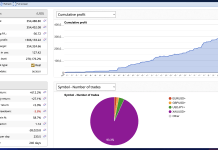
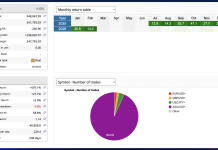
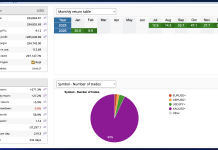
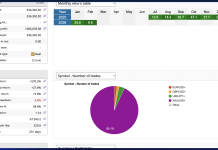
- Deployed and refined over multiple market regimes, NEDEX has demonstrated its operational resilience. Over the past six months of continuous live operation, the system has maintained performance integrity, navigating periods of high volatility and low liquidity without degradation of its core efficiency or detection profile. This extended live track record serves as empirical validation of the architectural mandates for modern market-neutral execution.
- Live Performance: https://www.fxblue.com/users/nedex
Full details: https://www.nehcap.com/nedex-hybrid-masked-arbitrage/
Please email us support@nehcap.com if you want pricing and start. - We take care of setup and management of the system.
- Manages a segregated profile for each node—encompassing technical footprint, legal entity, infrastructure, and execution persona—to ensure isolation and plausibility.